Isabella Mittag

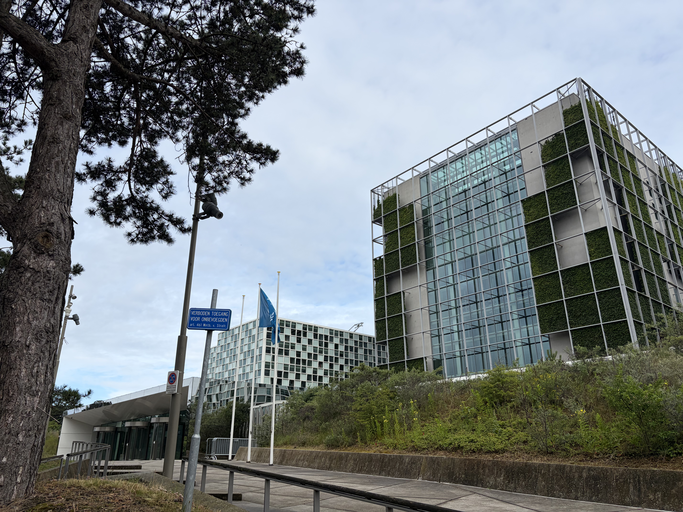
This past summer, I participated in the Maxwell School’s Pre-Law Program in Europe, a six-week intensive summer program based in Strasbourg, France, with visits to The Hague and Amsterdam in the Netherlands. The program had two courses with one on the First Amendment and Freedom of Religion from a global comparative perspective, and one on legal foundations and law school preparation taught by Syracuse faculty alongside international legal experts. I visited at the European Court of Human Rights in Strasbourg and the International Criminal Court and the International Court of Justice in The Hague through the program, where I had the remarkable opportunity to meet three sitting judges: Hon. Judge Yannis Ktistakis at the ECHR, Hon. Judge Joanna Korner at the ICC, and Hon. Judge Hilary Charlesworth at the ICJ. Beyond the classroom, Strasbourg itself was an extraordinary place to be as it was deeply walkable, culturally rich, and shaped by centuries of French and German influence that made the city feel like a living lesson in European history and identity. What I valued most was leaving the program with genuine clarity that law school is the right path for me.
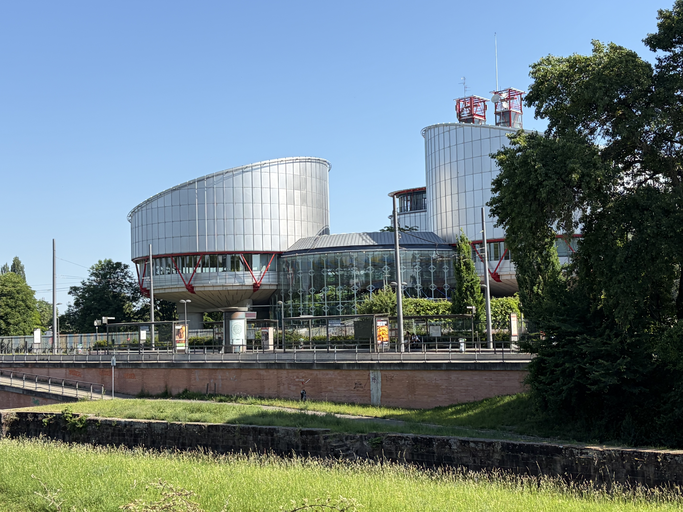
What surprised me most was visiting the European Court of Human Rights and learning in depth about how and why it was created and what its purpose looks like in practice today. Before the program, I understood the ECHR in broadly as a human rights institution, but I had not fully grasped the historical urgency behind its founding in the aftermath of World War II, or the complexity of how it navigates cases across 46 member states with vastly different legal traditions. Meeting Judge Yannis Ktistakis made the court feel real in a way that reading about it never could. I left with a much deeper appreciation for how international legal bodies function not just as abstract institutions, but as active mechanisms through which individuals can seek accountability from their own governments.
In the near term, I am planning to pursue a legal internship at a law firm during the remainder of my undergraduate career to build practical exposure to legal practice alongside my academic work. Looking further ahead, I intend to apply to law school and hope to focus on international human rights or public interest law, areas that this program brought into much sharper focus for me. I am also keeping open the possibility of returning to international legal institutions whether through further study, internships, or eventually work given how profoundly the court visits shaped my understanding of what a career in international law can look like.
The Honors award provided meaningful financial support that helped offset a portion of the program’s tuition and travel costs, making it more feasible for me to participate in what is an otherwise significant financial commitment. Having that support signaled to me that the Honors Program was invested in this experience as a serious academic and professional opportunity, which added to my sense of purpose going into it. I am grateful that the award made it possible for me to say yes to a program that turned out to be one of the most formative experiences of my time at Syracuse.
This program was pivotal in confirming that I want to pursue law school after completing my undergraduate degree at Syracuse. Academically, it deepened my understanding of comparative and international law, which connects directly to my studies in policy and anthropology which are fields that are fundamentally concerned with how systems of power shape people’s lives across different contexts. Professionally, meeting judges at three of the world’s most significant international courts gave me a clearer picture of the range of careers available within international law and human rights, and helped me begin to articulate where I see myself within that landscape. The program also strengthened my legal research and analytical skills in ways I expect to carry into both law school applications and future internships. I want to acknowledge the two groups of people most responsible for making this experience happen. My parents who supported me wholeheartedly and the Pre-Law advisors at Syracuse who introduced me to this program.