
Resources for Thesis Development

Developing your thesis isn't something you have to do on your own! The Honors Program has access to a wealth of support systems to assist you throughout the full thesis process, from developing a topic, finding sources for research and editing your drafts. Please reach out to honorsadvising@syr.edu or your Honors advisor if you would like more details on how to utilize these resources!

Connecting with a Faculty Advisor

Before Your First Meeting

Identify potential faculty members to contact

  • Choosing a professor you have a professional relationship with
  • (either through a previous class or prior research) is a great option.
  • Additionally, if you're in a program with a capstone course or a similar final requirement, this professor is a good option to consider..
  • If you don't know a professor who you'd like to work with, that's okay! Do your research about them and know what their responsibility will be.
  • If you have not yet identified a professor - here are some suggestions:
    • Go to the department page and research faculty profiles listed. Then take a deeper look at research descriptions, publications and previous undergraduate student research assistants listed (use faculty/group webpage, LinkedIn, search journal publications in library databases)
    • Reach out to your Faculty Advisor listed in Orange Success – ask them to recommend potential faculty you could reach out to
    • Reach out to the Honors Core Faculty member in your school or college for recommendations
  • Sometimes professors aren't able to act as a Thesis Advisor or Reader. It's a good idea to have a couple of backup options in mind so you have a plan if this is the case.

Prepare materials and information for your meeting

  1. Before your meeting, you should have a general idea about what your thesis project will entail. It would be worthwhile to take a look at the Junior Thesis Proposal before your initial meeting with faculty.
  2. Be prepared to answer questions about Honors Faculty Thesis Advisor expectations. Should the faculty have any further questions- your Honors Advisor is happy to answer those questions:
      • Faculty Thesis Advisor: Acts as the main point of contact, feedback and support throughout the thesis project process. The Faculty Thesis Advisor must be full-time faculty in the area of study for the thesis. They are identified at the outset, approving the Junior Thesis Proposal, and providing feedback and support throughout the research and writing process. FTAs also provide key feedback on draft submissions.
      • Thesis Reader: Acts as a second source of feedback and support, specifically reading and commenting on initial and final draft submissions. The Thesis Reader is not required to be full-time faculty; they must be a subject matter expert, able to comment on the content of the thesis project.
  • As part of this planning, it's a great idea to set some initial goals and a loose timeline with deliverables that you can communicate with faculty (i.e. I'll meet with the Honors librarian by x date and get back to you, etc.).
  • Know key thesis information (i.e. difference between and FTA and a TR, where timelines are found, etc.) and reach out to your Honors Advisor if you have questions!

Reach out to the faculty member and describe your thesis idea/interests

  • Once you've identified a faculty member who you'd like to contact, it's time to actually do it!
  • We recommend you contact professors either via email or during their office hours, that way they also have time to prepare for your meeting.
    • PLEASE DO NOT send a generalized email to a list of professors.
  • Email is typically not a good medium to ask a faculty to be your thesis advisor. It's typically more effective to do so in a meeting.
  • If you're emailing a professor, it is important to setup a follow-up meeting in-person/on Zoom to discuss the details of your project.
  • Be prepared for the conversation. Be ready to present your ideas/interest in a concise way but also be prepared for faculty feedback.

Approaching Faculty

Approach faculty with respect.

Before you approach professors, prepare yourself by already being familiar with their research:

        • If a professor says their lab is full, if you are talking rather than emailing, you might follow up with questions like:
                • "When would be a good time to come back to ask again?"

                • "What do you look for?"

                • "Are there particular skills I should cultivate or courses I should take first?"

                • "Can I shadow someone in your lab so I can see the work students are doing?"

                  •  
                    • Contact professors during their office hours or via email (but do not send a general email to a whole list of professors).
                    • You may want to interview other students who have worked with the professor.
                    • When you introduce yourself, discuss your interests, qualifications (relevant coursework, past experience), and expectations. Have your résumé and transcripts ready.
                    • Professors get lots of email. It is easy to overlook an email message. When and where possible, consider talking with professors instead of emailing.
                    • Your letter (or conversation) should express why you want to be a part of this professor's research. Professors typically like to work with undergraduates, but they cannot say yes to everyone who asks; make it easy for them to choose you.

Maintaining Your Connection

After you've made your initial connection with a faculty member, it's incredibly important to keep in touch with them, especially if you're going to be abroad in a subsequent semester. Some steps you can take to facilitate this would be:

  • Have a plan in place with a timeline, and establish that you will follow up via either email or appointment during your meeting
  • Within 24-48 hours, send a follow up email, thanking them for their time and consideration.
  • If you're going abroad, try to be in contact a few times throughout the semester.

Optional: HNR 309 Thesis Development Seminar
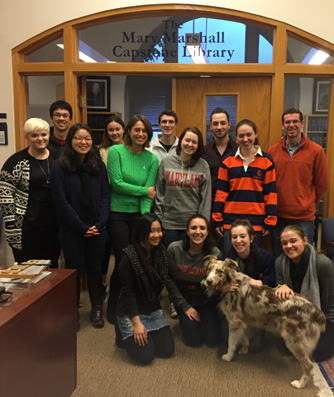
Butters and students in the Honors SuiteThe HNR 309 seminar is a 1 credit pass/fail seminar designed to help you organize the resources necessary for successful completion of the thesis, develop your project development and implementation skills, and provide a support network (the instructor and your class) for you during your project.

HNR 309 is not required and there are other ways to get started on your thesis. This is one social and supportive path to thesis success, and building a support network early is an important part of being able to complete a thesis.