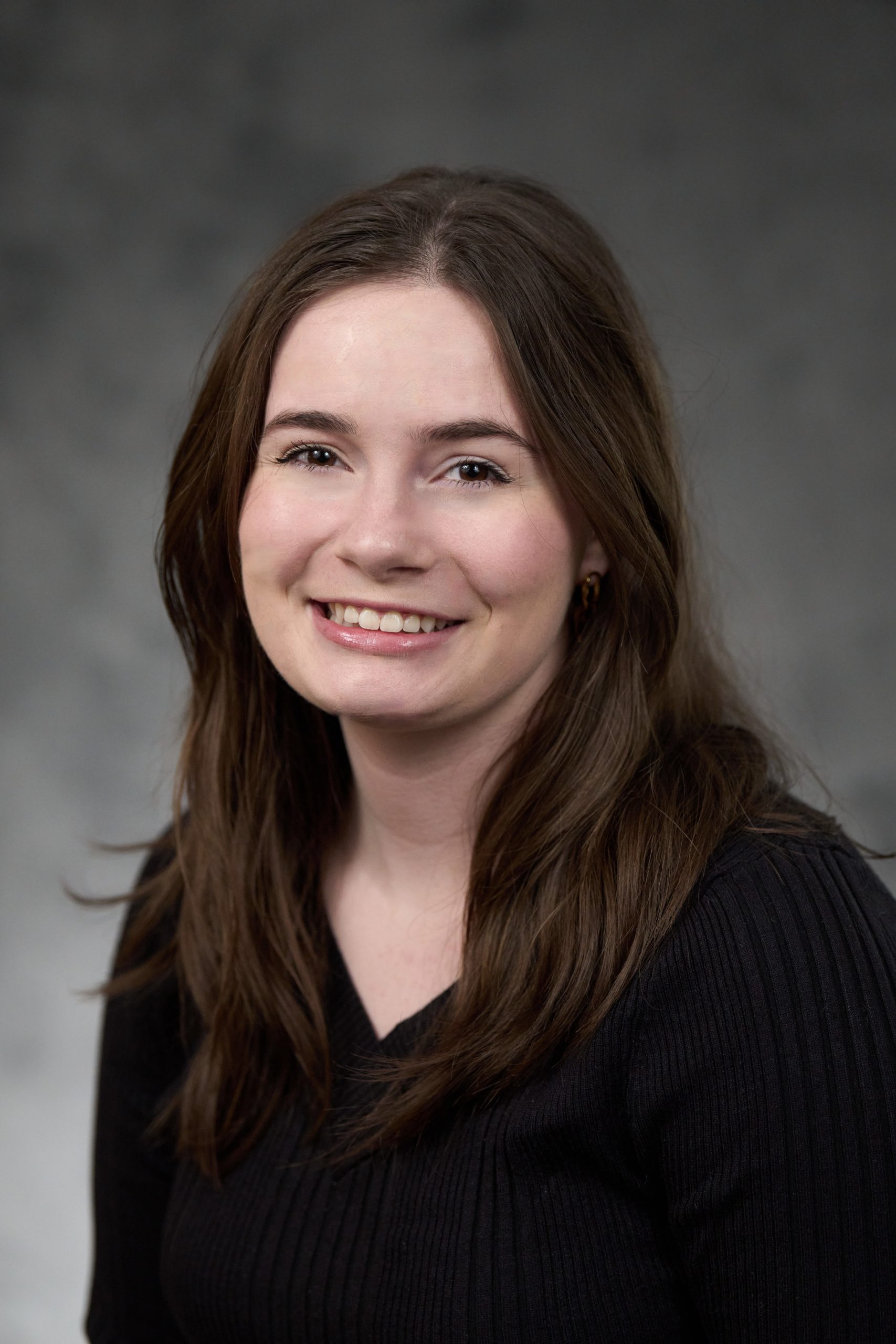
Keira Bowers
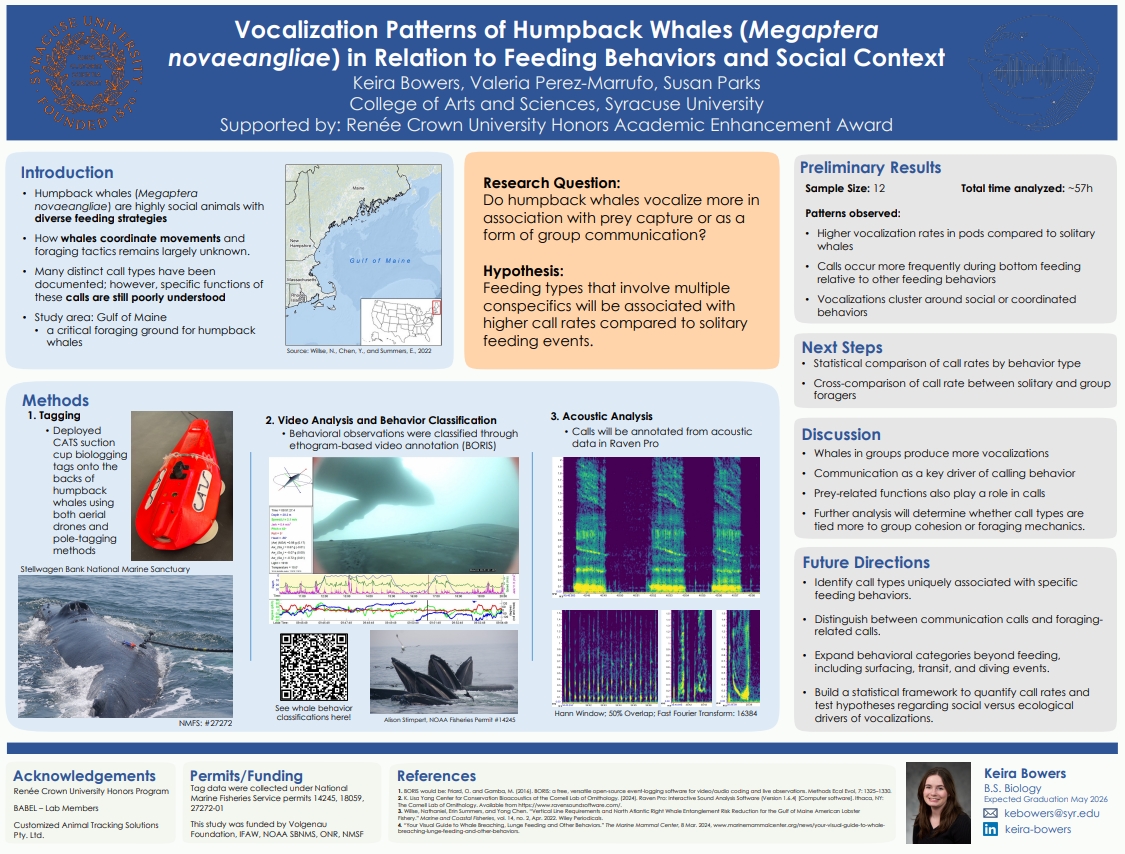
I used my summer funding to continue my Honors thesis research on humpback whale feeding behaviors. The support let me purchase the materials I needed and return to campus early, living in off-campus housing. Most of my time was spent analyzing biologging videos and annotating whale behaviors frame-by-frame using specialized software. This was one of my favorite parts of the entire project because it let me actually see the behavior I’d been studying on paper. Overall, the experience gave me a much deeper understanding of the species and helped me stay on track with my research timeline.
I was surprised by how long the video analysis actually took. I knew annotating behavior would be detailed work, but I didn’t realize how time-consuming it would be to review every frame and verify each action. That extra time requirement could have easily pushed me behind, so I’m genuinely glad the funding let me return early and get several weeks of work done before the semester started. It made a huge difference in keeping my project on track.
This experience directly supported my academic and professional goals by strengthening the exact skills I need for a future in animal behavior and wildlife research. Working closely with biologging videos and annotating behaviors gave me practical experience. It confirmed for me that I want to pursue a graduate degree focused on animal behavior or wildlife biology, especially work involving real field data and species-specific behavioral analysis. This project also helped me build confidence in managing independent research, handling large datasets, and making careful behavioral interpretations, skills that will matter in any research lab or marine program I join next. Overall, it pushed me closer to the career I ultimately want: studying wildlife and contributing to conservation through behavioral science.
I plan to continue developing this project throughout the academic year as I finish my thesis. My goal is to publish the research in the spring, once the full analysis and writing are complete. This work will also support my plans to graduate with both Biology distinction and Honors. Beyond that, I hope to use this project as a foundation for future research in animal behavior and marine ecology.
Receiving this award from Honors made the entire experience possible. The funding allowed me to purchase the materials I needed for my analysis and return to campus early, which gave me the extra time required to work through the video data before the semester began. Having that head start kept my thesis on schedule and reduced a lot of stress during the fall. It also gave me the flexibility to focus fully on my research instead of juggling logistics or financial barriers. Overall, the support directly strengthened the quality and progress of my project.
One thing I’d add is how grateful I am for the mentorship I had throughout this process. My lab mentor, Valeria Perez-Marrufo (a PhD candidate) played a huge role in helping me shape the project, stay grounded when the analysis got overwhelming, and grow more confident in my own decision-making. This experience reminded me how much good mentorship matters, especially when you’re working on something as independent and technical as a thesis. Overall, this opportunity helped me move my project forward and made me feel more supported and capable as a developing scientist.